Thursday, July 11, 2013

How to Install Plastic Bird Spikes

by Fran Prisco

Each year homeowners spend hundreds of dollars cleaning up after and repairing the damage created by pest pigeons. The domestic pigeon has become quite a nuisance in urban areas. Pigeons build relatively flimsy nests from sticks and other debris, which may be placed in trees, on ledges, or on the ground, depending on species. They lay one or two eggs, and both parents care for the young, which leave the nest after 7 to 28 days. Pigeons build relatively flimsy nests from sticks and other debris, which may be placed in trees, on ledges, or on the ground, depending on species. They lay one or two eggs, and both parents care for the young, which leave the nest after 7 to 28 days. Pigeons have adapted to most of the habitats available on the planet.  

How to Install Plastic bird spikes

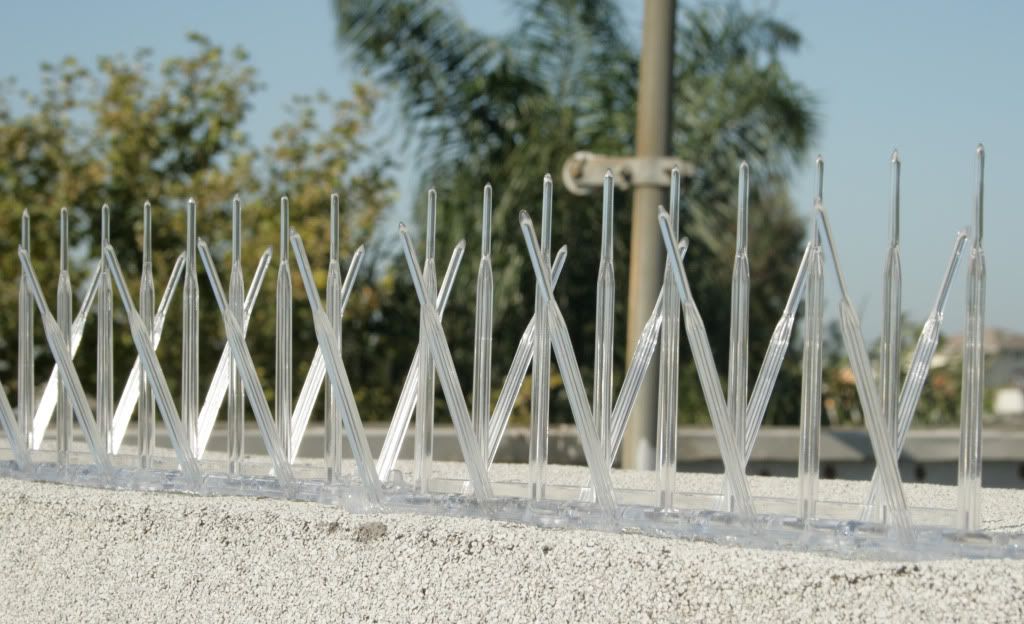
 There are many products out there that can help to get rid of pest pigeons from your property. By far the easiest to use and one of the most effective are plastic bird spikes. Bird spikes are made of plastic or stainless steel. Some have a plastic base with stainless steel spikes. They usually come in either one foot or two-foot sections. Plastic bird spikes come in different widths some as wide as 7” to be sure to cover the entire surface where pest pigeons are landing. They are used on flat as well as curved surfaces such as window ledges, roof edges, patio covers, arched entryways and other areas that pest pigeons like to roost and nest.

Installation of plastic bird spikes is relatively easy. You can glue or screw them down. Make sure that all debris left behind by the birds is cleaned up first. Use a mixture of bleach or ammonia with water to wet down the area and rinse it clean. Do not clean bird droppings dry as they can be inhaled in dry form and cause illness. When cleaning bird droppings use a mask and gloves. Use enough plastic bird spikes to cover the entire area that the pigeons are landing or roosting on. If they are in an area that is hard to get to it might be wise to call an expert. There are many companies that install bird control products like plastic bird spikes.  

How Plastic bird spikes Work

Once properly installed plastic bird spikes make it difficult for pigeons to land. The plastic bird spikes are usually 4.25” to 4.50” high so that pigeons and larger birds can not straddle the spikes. Be sure to look for a spike that has a “center” spike running down the middle. This will keep the birds from building nests in the spikes themselves. Covering all of the surface of a ledge or widow sill, will keep the pigeons form landing as birds land feet first, they will sense that something is there and move on. When first installing plastic bird spikes, you may want to watch and see if the birds find another area of your home or building to land on. That area too will need to have plastic bird spikes installed. If you are unsure if you can put in the plastic bird spikes yourself to call a local bird control installer. Most pest control companies can help, or call the pigeon spike manufacturer for an installer near you. Getting ride of pest pigeons can be as easy as “gluing and screwing”!

Tuesday, July 9, 2013

Plastic Bird Spikes Combine Economy with Efficiency


by Alex A. Kecskes

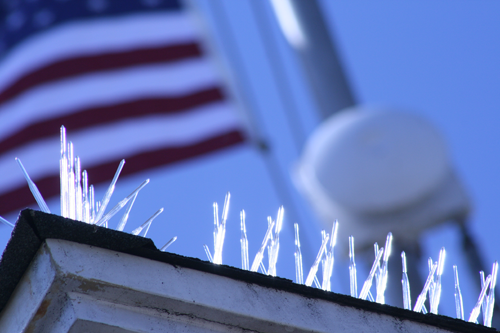
One of the best values in bird proofing today is the Plastic Bird Spike. These clever devices deny birds a suitable landing zone. After a few unsuccessful attempts to negotiate around the intimidating spikes, birds wise up and just move on. The spikes are ideal for deterring larger birds--like pigeons, crows, gulls, vultures and raptors. And they can be used virtually anywhere with little or no maintenance. The blunted spikes are safe for birds and maintenance crews, which is why they have earned the approval of humane groups around the world--including the U.S. Humane Society and PICAS (Pigeon Control Advisory Service). They are also GSA approved. This might be one reason why plastic bird spikes have been widely recommended by building contractors, architects, and municipalities.

Spikes for Many Species

Let's say you're being inundated by pigeons. Plastic bird spikes have proven to be highly effective in keeping these filthy birds from landing and roosting on ledges, parapets, rooftops and other structures. As most property owners may have noticed, pigeons can be very aggressive and often feed in flocks, devouring seeds, bread, vegetables, meat and almost any food discarded by humans. They roost together on rooftops, on walls, or any nook or cranny they can find. And they create quite a mess in droppings, which often carry any of 60 known diseases, some of which can be quite serious and life-threatening to humans.

If you have a problem with seagulls--and many property owners do, since these birds have begun to migrate inland--you'll need an effective bird proofing measure. Gulls are attracted to food scraps in cities, suburbs and municipal dumps. Recently the large birds have begun to nest in shopping centers, near fast food eateries, and on supermarket roofs. Gulls are clever birds that have increasingly been born and bred in cities, scavenging for food and becoming very aggressive, especially during breeding season. What's most alarming is that gulls have begun to dive-bomb and strike construction crews and roof maintenance and repair workers. In one instance, they even grabbed an ice cream cone right out of a little girl's hand. Installing plastic bird spikes is economical and effective way to deter these pest birds.

Another pesky bird is the crow. These smart birds set up close-knit communities to keep an eye out for predators or other threats. In the winter, crows roost in large flocks reaching up to 1,000 birds. Plastic bird spikes will discourage these birds from landing, forcing them to move on. Crows will invade school grounds, commercial property, healthcare facilities and fast-food eateries. They are not very particular about their diet and will eat anything from seeds, grains, and fruits to scavenged carcasses and small animals--imagine the diseases they can transmit on their beaks and feet as they hop from table to table at an outdoor restaurant.

Plastic bird spikes also do a nice job in deterring turkey vultures. These big birds have wide 6-foot wingspans and a short, hooked bill, which they use to rip apart carrion.  Turkey vultures inhabit the southern United States, Mexico, and South America, as well as subtropical forests, shrublands, deserts, foothills, pastures, grasslands, and wetlands. The big birds will feast on lifeless animals, forage for food individually during the day, and return to a roost after dark. They mostly nest in the nooks and crannies of buildings, and as much as you might be tempted to shoot them, they are protected under the Federal Migratory Bird Treaty Act.

Advantages of Plastic Bird Spikes

One of the major benefits of using plastic bird spikes is that, unlike steel bird spikes, they are non-conductive. Which means they can safely be used near electrical equipment and any kind of antenna radiating RF energy. Since they won't interfere with EM transmissions, you can use them near cell phone towers, airport towers, relay stations and other areas where high-frequency transmissions are being generated.

Another advantage of plastic bird spikes is that they are highly durable. They can stand up to tough weather conditions. The best spikes in this category are made of 100% post-industrial plastic materials. The material is tough, strong, and eco-friendly. Better plastic spikes are also U.V. protected to endure long periods in sunlight and bad weather. One popular brand of plastic spike can stand temperature swings form +310 degrees F to -200 degrees. F.

Many architects and builders like plastic bird spikes because they blend into a structure's design and color scheme. Which means, the spikes are not as visually intrusive as other bird deterrents. One company even offers plastic bird spikes in a wide range of colors--including white, tan, gray, black, brown, brick red and even crystal clear.

Plastic bird spikes are also surprisingly easy to install. They come in 3-, 5- and 7-inch widths and they need no assembly. A single row of plastic bird spikes will typically cover an area of 7 inches wide. The spiked strips come in two-foot sections. The best plastic spikes feature a flexible base that easily conforms to any flat or curved surface. Installation is a snap since each spike strip comes already pre-drilled with holes along the base, allowing the strip to be screwed onto any surface. You can also glue the strip down in areas where screws are either impractical or prohibited. A glue trough on the base of each spike strip allows for fast and easy application and facilitates rapid installs.

Finally, plastic bird spikes are more economical than their steel counterparts. This can be a factor in large installations or for companies that have an extremely tight bird control budget. Keep in mind that some manufacturers offer a full 5-year guarantee on their plastic bird spikes. So you are covered against breakdown of the product and UV degradation of the plastic.


Monday, July 8, 2013

Bird Spikes for the Ultimate in Bird Control

bird spikes 


If you own a small retail shop, pest birds can quickly turn it into a “little shop of horrors.” Unless you implement some type of effective bird control, pest birds can “dive bomb” your customers coming and going. Birds can also deface your signage, your windows and doors, even your walkways. Bird droppings on walkways can be a double problem since they can be tracked into your shop and they can create dangerous slip-and-fall hazards. Customers who slip on your property and become injured can file a legal claim against you for injury. The last thing you need right now. 
Without effective bird deterrents like Bird Spikes, pest birds can tie up your staff with daily cleaning chores. Windows and doors must be constantly cleaned. Walkways must be hosed down. Signage must be cleaned and cleared of bird nests (this usually requires your maintenance staff to climb a ladder). Birds nests and droppings can also clog rain gutters and spouts. And they can damage rooftop AC units, skylights and solar panels.
One proven way to get rid of birds is to use today’s most popular and effective bird control device: the Bird Spike.  
Bird spikes are easy to install on ledges, parapet walls, conduits and signs--on either flat or curved surfaces. Long lasting, USA-made stainless steel spikes come in 3-, 5- and 8-inch wide spiked strips and two-foot sections. Here’s how to evaluate the spiked strips for the coverage you need:

  • 3-inch spikes will provide 2 to 4 inches of coverage on a 5-inch wide ledge
  • 5-inch spikes will cover 5 to 7-inches on a 7-inch wide ledge
  • 8-inch spikes will cover 8 to 10 inches on a 10-inch wide ledge
A company called Bird-B-Gone offers a stainless steel spike with a patented “bend-and-crush” design that has 40 spikes per foot. This will provide ample bird deterrence for many applications. Bird spikes also come in unbreakable polycarbonate. These versatile spikes can be used to keep birds off cell phone antennas and other radio frequency aerials. Poly spikes come in rows of spiked strips in 3-, 5- and 7-inch widths and two-foot sections. Some shop owners prefer these spikes simply because they come in a variety of colors—like white, tan, gray, black, brown, brick red and crystal clear—to match their storefront.

Before you install bird spikes, clean out any nests and droppings. When installing bird spikes, the spike’s width should leave no more than a 1-inch gap on either side. To attach the spike, use glue, screws or tie-down straps. To install the spikes on pipes and conduits, use common hose clamps, nylon ties or wire lashings. To glue down the spikes, use a construction-grade adhesive (available at hardware stores). To screw down the spikes, use the offset pre-drilled holes provided. Better quality spikes will have breakaway notches if you need smaller spiked sections.

Thursday, December 20, 2012

How Bird Spikes Can Protect Your Home from Pest Birds

Get Rid of Birds with Bird Spikes, get rid of birds with bird spikes.

by Alex A. Kecskes

If you’re like most homeowners, you spent some time this summer painting your home. You may also have painted your patio covers, gazebos, and fencing. To protect your roof, probably cleared out your rain gutters, getting rid of some bird nests and bird debris.  And you may even have cleaned off walkways, pool and spa areas that were covered with bird droppings. As an informed homeowner, you know that bird droppings can carry any of 60 known diseases. So the last thing you want is bird droppings on or near your pool, spa, patio tables and chairs, or BBQ.
The good news is your home and its surroundings are now sparkling clean and fresh; the bad news, the pest birds that created all those droppings will probably be back--unless you take steps to bird proof your home.

One of the pest ways to bird proof is to install some Bird Spikes along the rooflines of your home, on the tops of your patio covers and gazebos, and any other elevated areas of your property. Properly installed, these bird deterrents can keep a wide variety of pest birds--especially large birds like pigeons and crows--from perching and pooping all over your home and property.
The bird spikes that last the longest are constructed of flexible, marine-grade stainless steel and feature a U.V.-protected polycarbonate base. Some bird spikes come with a non-reflective metal finish, which means they won’t stand out on your roofline or patio cover. Steel bird spikes come in 3-, 5- and 8-inch widths to cover areas up to 8 inches wide. For large birds like crows and gulls, you’ll need an 8-inch wide spike.

You can also get plastic bird spikes. These are less expensive than stainless steel spikes and will last many years. They come in a variety of colors to match your home’s color scheme. Available colors include white, tan, gray, black, brown, brick red and crystal clear. These spikes come in 3-, 5- and 7-inch widths to protect areas up to 7 inches wide. For mid-sized pest birds--usually from 9.5 to 11 inches long--you’ll need a 3-inch wide spike. One advantage of plastic spikes is that they can be installed near your dish TV antenna without worries about RF interference.

To keep your rain gutters clear of pest birds and nests, you can install some Gutter Bird Spikes. The best gutter spikes feature adjustable clamps at the base, so you can easily mount them to the lip of your gutter. If your home is out in the country or near the sea or a lake, you may be tired of dealing with really large pest birds like cormorants, turkey vultures or raptors. This is where you’ll want to invest in the Mega Spike, which features long, 7-inch spikes.

Regardless of which you choose, bird spikes typically come in two-foot sections. Better bird spikes will feature pre-drilled holes and glue troughs for fast, easy installation. The best bird spikes are blunted at the tips and won’t harm birds or pets. They have been approved by a number of humane groups worldwide, including the U.S. Humane Society and PICAS (Pigeon Control Advisory Service).

Before installing plastic bird spikes, make sure the surface is clean and dry. Be sure to remove any loose rust, peeling paint, bird droppings, feathers and nesting materials. Use commercial disinfecting cleaning agents to prevent exposure to any of the 60 known airborne diseases carried by birds. If the area is heavily contaminated with bird droppings, be sure to use proper eye and respiratory protection.


Monday, November 19, 2012

How to Get the Most Out of Bird Control Spikes

Bird Deterrents, Get rid of birds with bird deterrent products.

If your commercial property is being inundated by large birds--like pigeons, crows or gulls--you’ll need to address the situation promptly with some effective bird control. While the temptation is to ignore the birds, shoo them away, or blast them with a water hose, these measures are only temporary. Complaints from tenants will eventually force you to take action.

One of the best bird control devices is the tried and true bird spike. It’s been used successfully for years to deter pest birds from properties large and small.

Light, Medium and Heavy “Bird Pressure”

How should I install bird spikes? This is an often-asked question. And the answer depends on your specific bird problem. For “Heavy Bird Pressure” environments, you would want to go with a heavy concentration of Stainless Steel bird spikes. Bird pressure indicates how determined a bird is to remain in the area.  Heavy pressure areas are characterized by a high volume of birds nesting or roosting at the site with a food or water source nearby. Medium Pressure will draw only a handful of birds to a food or afternoon resting site, which may not be used for nesting or roosting. Light Pressure sites lack food or shelter, causing birds to stop only briefly during the day.

Where and How to Install Stainless Steel Bird Spikes

When installing Stainless Steel Bird Spikes in a heavy pressure environment, place them close together and make sure you cover all possible perching places. This includes ledges, I-beams, parapet walls, signs and conduits.  The best bird spikes will allow you to install them on flat or curved surfaces. (Look for bird spikes that feature a “bend-and-crush” design.) The rows of spiked strips come in 3-, 5- and 8-inch widths and two-foot sections. The 3-inch spikes will provide 2 to 4 inches of coverage on a 5-inch wide ledge; the 5-inch spikes will cover 5 to 7-inches on a 7-inch wide ledge; and the 8-inch spikes will cover 8 to 10 inches on a 10-inch wide ledge. Your bird spike should have up to 40 spikes per foot. It should have a “no-nest” design with no-gap spacing to prevent birds from roosting or landing.

Poly Bird Spikes

You can also get bird spikes made of rigid U.V.-resistant unbreakable polycarbonate. These, too, are ideal for deterring pigeons, seagulls or larger birds. And you can use them to deter birds in Light to Heavy Bird Pressure environments. These spikes come in 3-, 5- and 7-inch widths and two-foot sections. Here, 3-inch spikes will provide 1 to 5 inches of coverage on a 5-inch wide ledge; the 5-inch spikes will cover 5 to 7-inches on a 7-inch wide ledge; and the 7-inch spikes will cover 6 to 9 inches on a 9-inch wide ledge. Poly spikes also offer a cosmetic advantage--they come in 7 colors so they are less noticeable when installed.

Like their stainless steel counterparts, plastic bird spikes can be easily glued, screwed or tied down to virtually any surface.


Monday, September 24, 2012

Using Pigeon Spikes to Keep Pigeons from Roosting and Nesting

Stianless Steel Bird Spikes, Get rid of birds with stainless steel bird spikes.

by Alex A. Kecskes

Ever wonder why you don’t see many pigeons in Disneyland? After all, the place is a food paradise for pest birds, what with popcorn and food scraps under tables and chairs in just about every Kingdom. The reason is simple: the Magic Kingdom uses one of the most effective bird deterrents ever devised--the Pigeon Spike. You can see them if you really look for them.  They’re on many light poles and other lofty fixtures, structures and buildings. But they blend in because the spikes come in various colors.

The ubiquitous rock dove or pigeon is now just about everywhere. They have learned to live with humans and will boldly move into an area, digging for food in and around restaurants, trash bins, schools, colleges, amusement parks—anywhere there are people.

To survive, pigeons need a place to land and observe their surroundings. They’ll survey an area before roosting and nesting to makes sure there are plenty of food scraps, water and protection from predators and the elements. Unless there are deterrents like pigeon spikes to discourage them, they will quickly invade an area and take it over.

If you’re a property owner, you need to act proactively to ensure pest pigeons don’t invade your property and create an unhealthful mess.  One way to keep them away is through the proper use of effective pigeon spikes.

Pigeon spikes won’t allow these pest birds to land. The specially designed spike strips are easily mounted on rooftops, parapet walls and ledges using glue, nails or screws. Bird spikes come in rigid U.V.-resistant unbreakable polycarbonate spikes or high strength, durable stainless steel. The less expensive poly spikes are suggested for use around RF or cell phone antennas, since they won’t interfere with radio transmissions. Pigeon spikes also come in different colors--including white, tan, gray, black, brown, brick red and crystal clear so they’ll blend in better with a structure or building. One manufacturer offers bird spikes with a non-reflective metal finish.

Before you install pigeon spikes, clean the area thoroughly of bird droppings, feathers and nesting materials. Pigeons are attracted to this debris and will consider the area “friendly.” Use commercial disinfecting cleaning agents to reduce your exposure to any of the 60 known airborne diseases carried by birds. In some cases, it may be necessary to equip cleaning crews with PPE (Proper Protective Equipment) in the form of eye and respiratory protection. In severely infested areas, you may need to hire certified bio-hazardous waste removal companies to do the job. After live enzyme treatments are applied, germicides/viruscides or both may have to be employed to ensure that pathogens are completely removed.

When installing bird spikes, make sure to leave no gaps for the pigeons to squeeze through. Stainless steel spikes come in 3-, 5- and 8-inch wide spiked strips. The 3-inch spikes offer 2 to 4 inches of coverage on a 5-inch wide ledge; the 5-inch spikes will protect 5 to 7-inches on a 7-inch wide ledge; and the 8-inch spikes will cover 8 to 10 inches on a 10-inch wide ledge. One manufacturer offers a stainless steel bird spike with a patented “bend-and-crush” design for permanent installations. The best pigeon spikes feature a unique “no-nest” design with no-gap spacing to deter birds from roosting or landing.

Sometimes pigeons will build nests in rain gutters. This can clog the gutters and prevent them from directing water away form the roof. This, in turn, can cause extensive water damage. In this case, you should install Gutter Spikes, which are specially designed to fit onto gutters.

The best way to deter pest pigeons is through the use of effective bird deterrents like pigeon spikes. Once installed, they require very little maintenance. The best spikes will offer years of service and will hold up under harsh weather conditions.


Wednesday, September 5, 2012

Get Rid of Pest Birds with Plastic Bird Spikes


Birdproofplastic


by Alex A. Kecskes

Alnwick and Amble, two small market towns in north Northumberland, England, had a real pest bird problem a few years ago. Both towns have historically suffered from pigeon infestations and messy droppings along its streets and market areas.

The pigeon droppings had defaced pavements, walls and rooftops, and had even blocked gullies and drains in the two towns. Pigeons had become a serious problem in Alnwick, particularly in the Market Place, along Fenkle Street and Narrowgate. In Amble, the pigeons had begun to roost on several buildings along Queen Street and on Lawrence's DIY store on Bridge Street.

The townsfolk had a number of meetings, and suggestions for solving the pigeon problem included the creation of a pigeon loft where the birds would be attracted to nest. The plan was to remove the eggs and replace them with dummy eggs. This, it was hoped, would reduce the exploding pigeon population. At one time, the Amble city council had even allowed firearm culling, but those methods were soon abandoned because citizens felt it was cruel to simply shoot the pigeons.

If only the townsfolk of Alnwick and Amble had consulted some professional bird control experts, their pest pigeon problems could have been solved efficiently and humanely, for among the many tools in a pro bird controller’s arsenal is the Plastic Bird Spike

Unlike firearms and birth control measures, plastic bird spikes are perfect for deterring pigeons, crows, gulls, vultures and raptors. These versatile bird-proofing devices are widely used on rooftops, ledges, signs and other elevated areas. The blunted spikes are harmless to birds, pets and installation or cleaning crews. The devices have been approved by the U.S. Humane Society and PICAS (Pigeon Control Advisory Service). In addition, plastic spikes are also GSA approved (U.S. General Services Administration).

Plastic bird spikes are made of a polycarbonate material that can be used around electrical and RF transmission equipment. They can be installed around cellphone antenna arrays and other radiating devices. The best plastic spikes are U.V. protected to withstand years in the sun and punishing weather. One popular plastic bird spike can withstand temperature extremes form +310 degrees F to -200 degrees F. It comes with a full 5-year guarantee.

To blend in better with their surroundings, plastic bird spikes now come in a full range of colors--including white, tan, gray, black, brown, brick red and crystal clear. Even custom colors are now available. It’s small wonder architects and builders so often recommend plastic bird spikes as a bird control measure. Plastic spikes are also less expensive that steel bird spikes. This makes them ideal for large installations or for those on a very tight bird control budget.

Another advantage of plastic bird spikes is that they are virtually maintenance free and require no assembly. The spikes come in a variety of sizes--typically 3-, 5- and 7-inch widths and two-foot sections. A single row of plastic bird spikes usually covers a 7-inch wide area. For easy installation, look for plastic spikes that have a flexible base that you can bend and turn to fit onto any flat or curved surface. In some cases, the spike strips have been pre-drilled with holes along the base for fast, easy installation. You can also glue the strip by using the glue trough (a feature found in better spikes) on the base of each spike strip. Use outdoor polyurethane construction adhesive to firmly secure the spikes. Remember to close up any gaps between spike strips to less than two inches. For extra wide ledges, use three or more rows of spikes and be sure to limit the gap between rows to less than two inches.

Finally, before installing plastic bird spikes, make sure the surface is clean and dry. Clean out any loose rust, peeling paint, bird droppings, feathers and nesting materials. Use commercial disinfecting cleaning agents to prevent exposure to any of the 60 known airborne diseases carried by birds. If the area is heavily contaminated with bird droppings (wet or dry), use proper eye and respiratory protection.